Last Updated on August 4, 2026 by Pokie Player
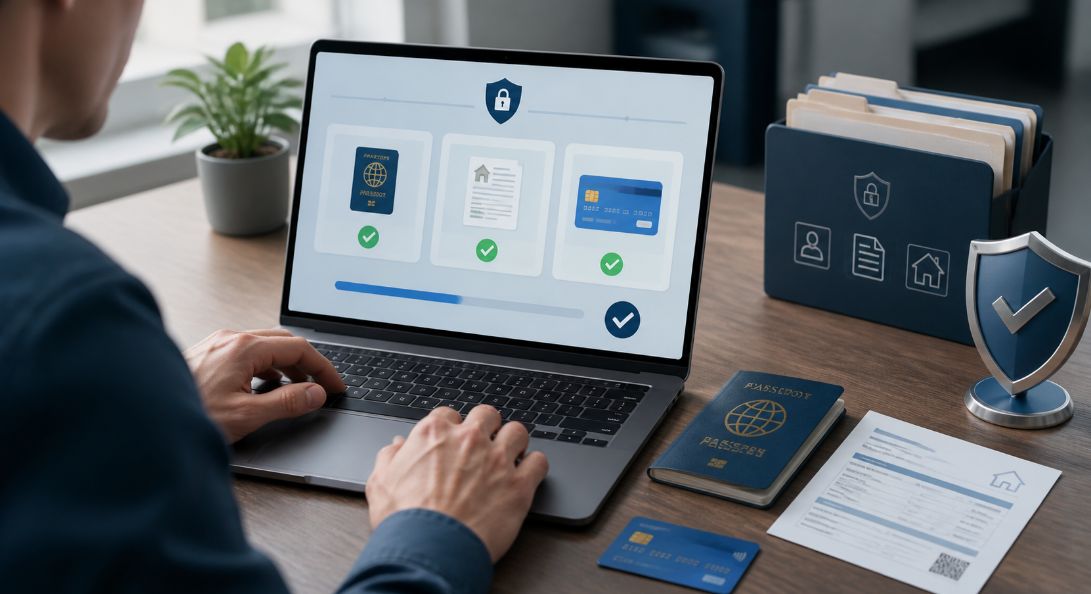
Australian players often see ID checks as a delay, but for offshore casinos they are usually a standard part of withdrawal control, fraud prevention, and account verification. A good KYC process should feel routine, not suspicious, and the best time to deal with it is before a player reaches the cashier with a winning balance.
What KYC means
KYC stands for Know Your Customer, and it is the process a casino uses to confirm a player’s identity before allowing full account access or withdrawals. In simple terms, it is the operator’s way of checking that the person opening the account is real, legally old enough to gamble, and using legitimate payment details.
For offshore casinos, KYC is often the bridge between easy sign-up and secure cashout. Many players only notice it when a withdrawal is pending, but the verification itself is usually a normal compliance step rather than a punishment.
Why casinos ask
Casinos ask for ID to reduce fraud, stop underage gambling, prevent account theft, and satisfy anti-money-laundering obligations. They also need to make sure the payment method belongs to the player and that the money being used is tied to a legitimate source.
From the player side, this can feel intrusive, especially if the request arrives only after a win. From the operator side, though, identity checks are part of the basic risk model for online gambling and financial compliance.
When documents get requested
The timing varies by operator. Some casinos ask for documents at registration, others during the first deposit, and many wait until the first withdrawal is requested. Conservative operators may request verification as soon as the account is opened, while others let players play first and only review documents when money leaves the cashier.
A common trigger is the first cashout, especially if the casino has not yet verified the player’s identity. Larger withdrawals, bonus activity, payment mismatches, or repeated account changes can also trigger extra checks.
Typical documents needed
The usual KYC package includes a government-issued photo ID, proof of address, and payment method verification. A passport, driver’s licence, or national identity card is typically accepted for identity, while a recent utility bill, bank statement, or tax letter is commonly used for address verification.
If the player deposits by card or wallet, the casino may also ask for a masked card image, wallet screenshot, or bank statement showing the payment source. In some cases, extra documents like a selfie holding the ID, a short video verification, or source-of-funds evidence may be required for larger activity.
How verification works
A standard verification flow starts when the player uploads the requested documents inside the account area or sends them through support. The compliance team then checks whether the details match the registration data, whether the documents are readable and valid, and whether any risk flags need further review.
If everything matches, the account is approved and withdrawals can move forward. If something is unclear, the casino may ask for a clearer scan, a different proof of address, or a fresh payment screenshot before releasing funds.
Why delays happen
Most delays come from avoidable issues rather than the existence of KYC itself. Blurry photos, cropped documents, mismatched addresses, expired IDs, missing corners, and documents dated too far back are some of the most common reasons approvals stall.
Another common cause is account mismatch. If the casino account name, address, or payment method does not line up with the submitted documents, the review will usually take longer because the operator needs to resolve the inconsistency. That is why players who prepare their documents early usually get faster results than players who wait until withdrawal day.
How players can prepare
The easiest way to avoid KYC delays is to prepare the documents before making the first deposit. Players should keep a valid ID, a recent address document, and a clear payment proof ready so they can upload everything quickly if the casino asks.
It also helps to use accurate personal details from the start. The name, address, and date of birth on the casino account should match the documents exactly, because even small mismatches can slow down approval. Clear lighting, full document edges, and readable text also matter more than many players realise.
Source of funds checks
Some offshore casinos go beyond standard KYC and request source-of-funds documents when the activity level becomes higher. This can include bank statements, payslips, tax returns, or other records that show the money being used is legitimate and affordable for the player.
These checks are more likely when deposits or withdrawals become large, when there is repeated high-value activity, or when the casino’s compliance team sees something unusual. While this can feel frustrating, it is part of how operators reduce financial crime risk and meet their legal obligations.
What “no-KYC” really means
When a casino says it is no-KYC, it usually does not mean verification never happens. More often, it means the casino delays verification until the player reaches a certain threshold or requests a withdrawal.
That is why players should read “no-KYC” as “KYC later,” not “KYC impossible”. The smoothest approach is still to verify early so the first withdrawal does not become a surprise bottleneck.
Best player habits
Players can reduce friction by uploading documents as soon as the account is created, checking that the casino accepts their chosen ID type, and using payment methods that match the account name. It is also wise to keep the document copies current, since older address proofs are one of the fastest ways to trigger rejection.
If a casino asks for extra verification, the best response is to provide clear, complete documents and avoid back-and-forth delays. In most cases, a clean submission is approved faster than a repeated partial submission.
Final take
Offshore casinos ask for ID because verification is a normal part of modern online gambling, not an unusual obstacle. It protects the casino, supports compliance, and helps keep withdrawals secure.
For Australian casino players, the smartest move is to treat KYC as part of the signup process rather than a last-minute problem. If the documents are ready, accurate, and readable, the withdrawal process is usually far smoother and far less stressful.
FAQs
1. Why do offshore casinos ask for ID?
They ask for ID to verify a player’s identity, prevent fraud, reduce underage gambling risk, and meet compliance requirements before processing withdrawals.
2. When will a casino usually request KYC documents?
Some casinos ask during registration, but many wait until the first withdrawal or when activity looks unusual.
3. What documents are usually needed for verification?
Most casinos request a photo ID, proof of address, and sometimes payment method proof such as a card image or bank statement.
4. Can KYC delay my withdrawal?
Yes, especially if the documents are blurry, expired, incomplete, or do not match the account details exactly.
5. How can I avoid KYC problems?
Use accurate personal details, keep clear document copies ready, and make sure your ID, address proof, and payment method all match your account.
6. What does no-KYC really mean?
It usually means verification is delayed, not removed. Many casinos still ask for documents before they release winnings.
7. Is KYC a bad sign at an offshore casino?
Not necessarily. KYC is normal at many legitimate casinos, and the main issue is how clearly and quickly the operator handles it.
Sources
- KYC & Casino Verification (US Guide 2026)
- KYC at Non-GamStop Casinos — Withdrawal Documents UK
- KYC (Know Your Customer): What it Means for Casino …
- ID Checks and KYC: What Every Player Should Know About Casino Verification
- Casino KYC and Verification Explained 2026
- Casino KYC Verification: Document Guide